
Garden Zoning Ideas for Different Outdoor Activities
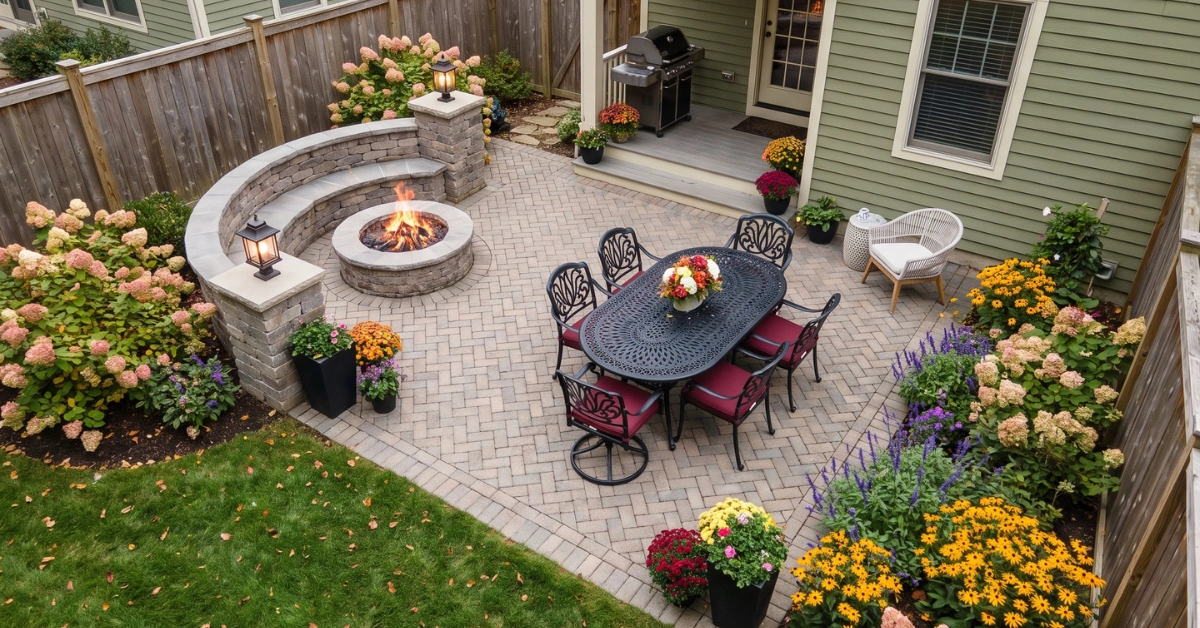
Most gardens try to be everything at once — and end up feeling like nothing in particular. A bit of lawn, a table shoved against the wall, a forgotten corner where the bins live. The fix isn’t more stuff or a bigger budget. It’s zoning: carving your space into areas that each do one job well. Even a small plot feels twice as generous when every corner has a purpose. Here are seven ways to divide your garden by what you actually want to do out there.
1. A Dining Zone You’ll Actually Eat In
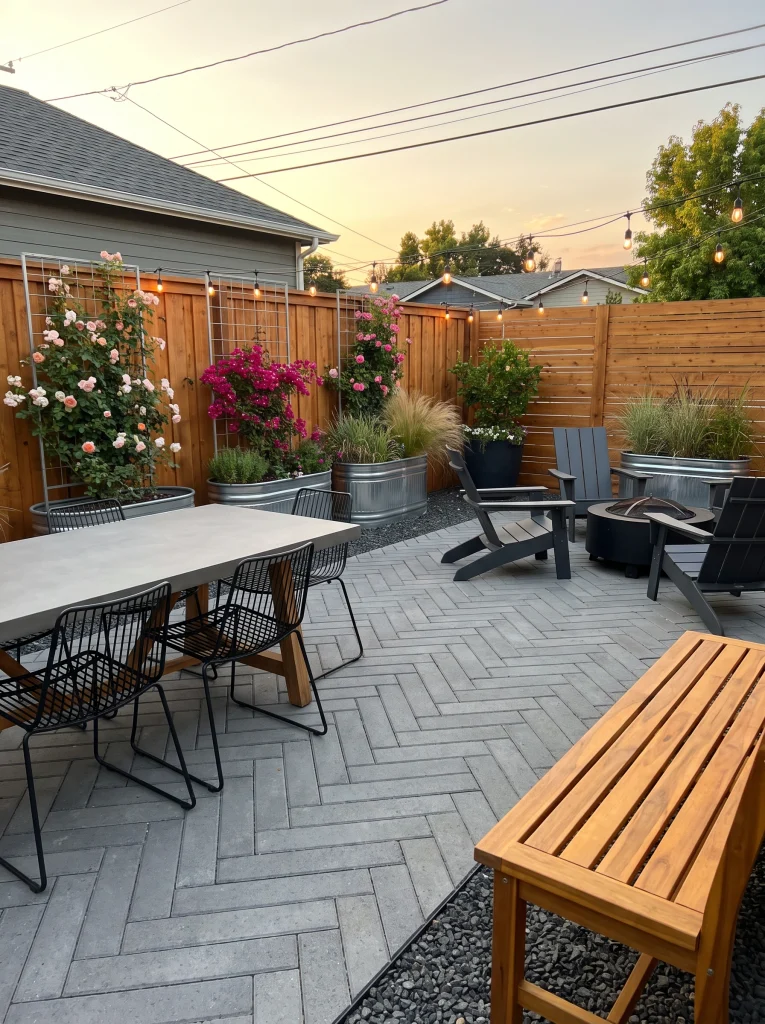
The classic mistake is putting the table where there’s space, not where it’s pleasant. Then nobody uses it. A good dining zone needs three things: a level surface, enough room to pull chairs back without hitting a wall, and — this is the one people forget — a bit of shelter and shade.
Site it near the kitchen door if you can. Ferrying plates across a wet lawn gets old fast. Allow roughly 3m x 3m for a table of six, so nobody’s perched on the flowerbed.
My tip: Notice where the evening sun lands and put your table there. Most of us eat outside in the evening, and a spot that catches that golden late light will get used far more than one that’s already in shade by 6pm.
2. A Relaxing Corner That Invites You to Linger
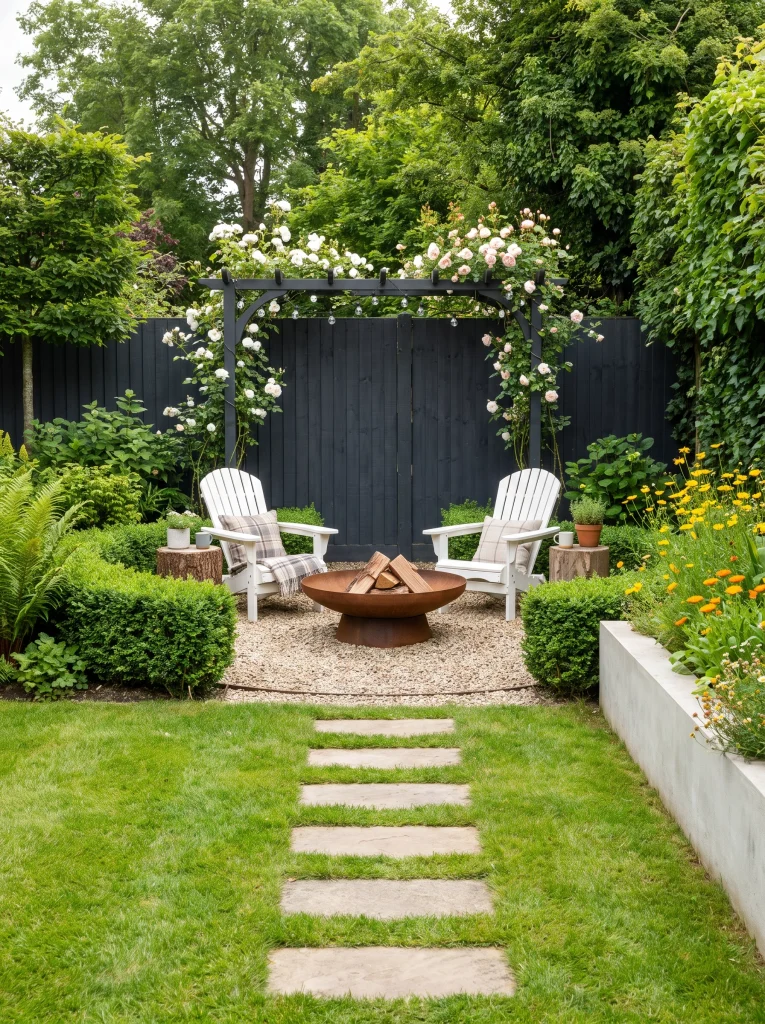
This is the zone for a cup of tea and your own thoughts — a single comfy chair, a bench, or a hammock strung between two posts. It doesn’t need to be big. Some of the best relaxing spots are barely a metre square.
What it does need is a sense of enclosure. We relax better with something solid behind us and a view in front — it’s an old instinct. Tuck the seat against a wall, a hedge, or a tall planting of grasses, and angle it toward the prettiest part of the garden.
Soften it with scent. A pot of lavender or a jasmine climbing nearby turns a place to sit into a place you don’t want to leave. This is a garden lived in, not just looked at.
3. An Entertaining Zone for Evenings With Friends
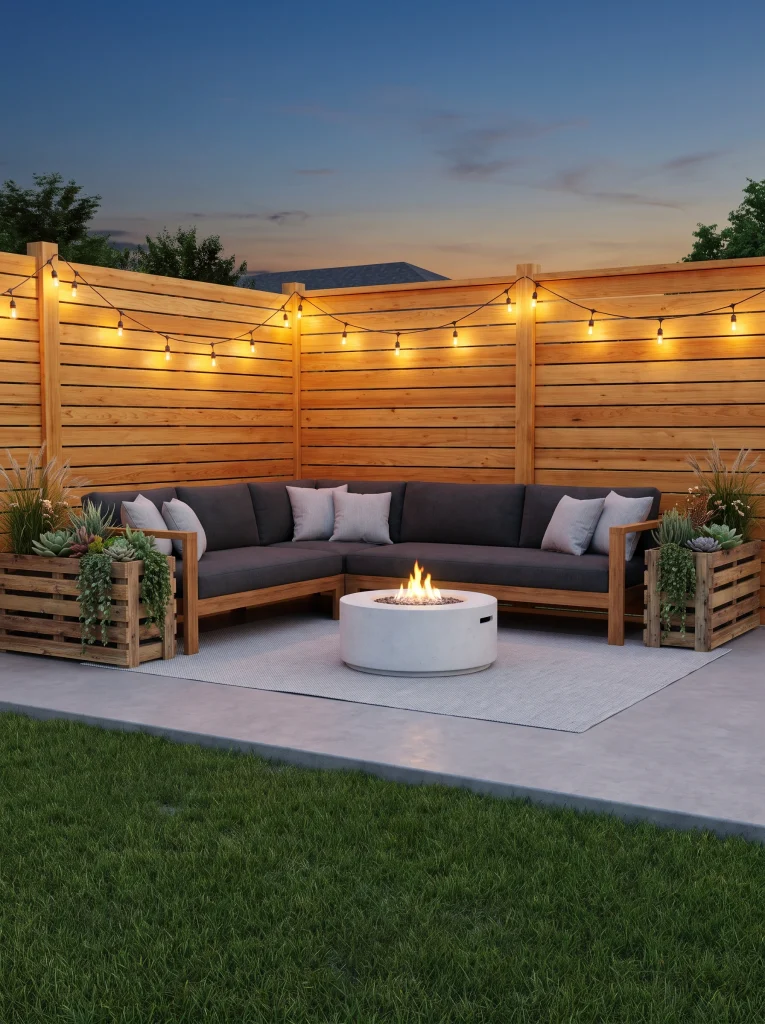
Dining is for meals; entertaining is for lingering after them. The heart of a good entertaining zone is usually a fire pit or a chiminea — something to gather around once the plates are cleared and the light drops.
Arrange seating in a loose circle or horseshoe so people can actually talk to each other, not a straight row facing the fence. Gravel makes a brilliant, affordable base here: it drains well, defines the area, and takes the heat of a fire pit without fuss.
- Keep any fire feature well clear of overhanging branches and fences — at least a couple of metres.
- String up some solar or festoon lights overhead; warm light is what makes people stay.
- A few weatherproof cushions and a basket of throws do more for the mood than any expensive furniture.
4. A Growing Zone for Homegrown Food
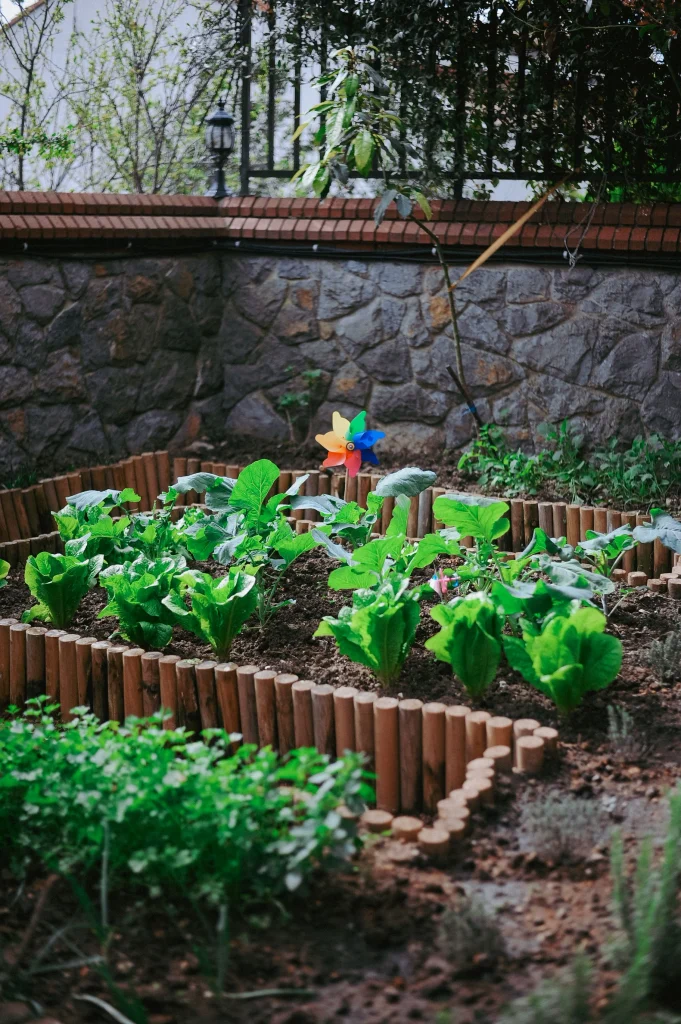
Whether it’s a full veg patch or a couple of raised beds, the growing zone has non-negotiable needs: sun and water. Most vegetables and herbs want at least six hours of direct light, so give this zone your sunniest spot, even if it’s not the prettiest.
Raised beds are worth every penny if you can manage them. They warm up earlier in spring, drain better, save your back, and keep the growing area tidily contained. A bed around 1.2m wide lets you reach the middle from either side without stepping on the soil.
Pro tip: Put your herbs in the bed nearest the kitchen door, not out with the main crops. You’ll snip basil and mint far more often when they’re two steps away instead of at the bottom of the garden.
5. A Play Zone Where Kids (and Dogs) Can Run
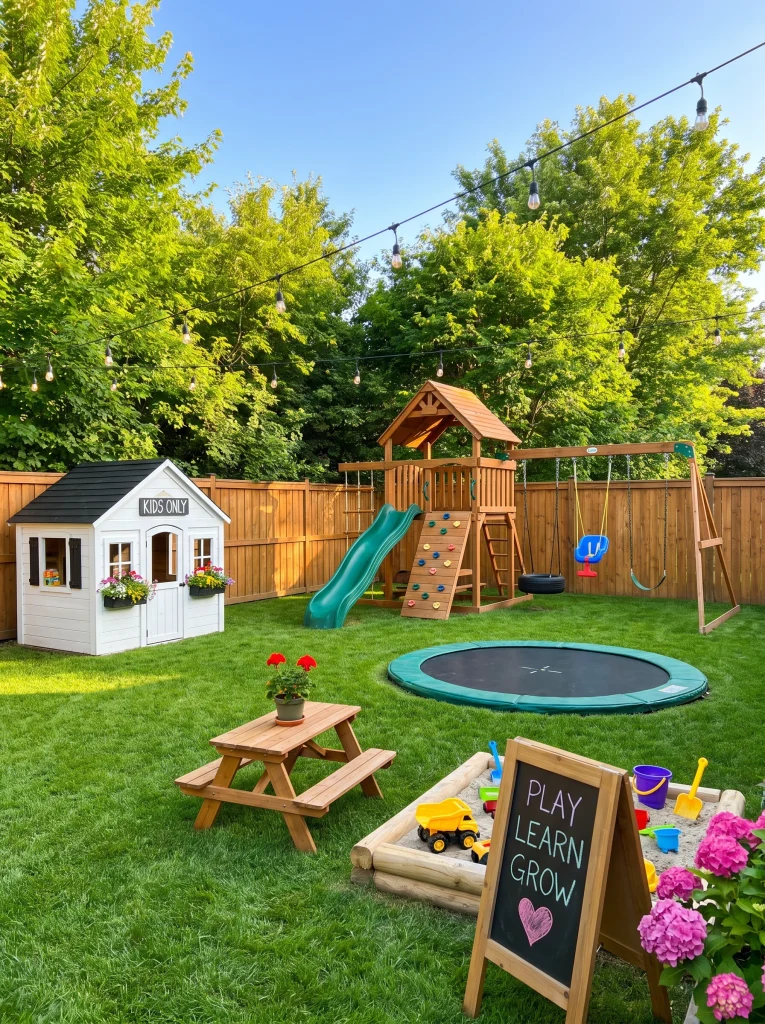
If you’ve got children or a dog, give them a defined patch rather than letting the chaos spread across every bed. A tough, hard-wearing lawn is still the best play surface going — soft to fall on, endlessly flexible, and free once it’s established.
Push your precious planting to the edges and out of trampling range, and choose robust, non-toxic plants near the play area. Avoid anything with thorns or poisonous berries where little hands roam.
Site this zone where you can see it from the kitchen or the seating area. Half the point of a play space is being able to keep half an eye on it with a coffee in hand. As the kids grow, a play zone converts easily into lawn, a patio, or beds — so don’t build anything too permanent.
6. A Transition Zone: Paths That Connect It All
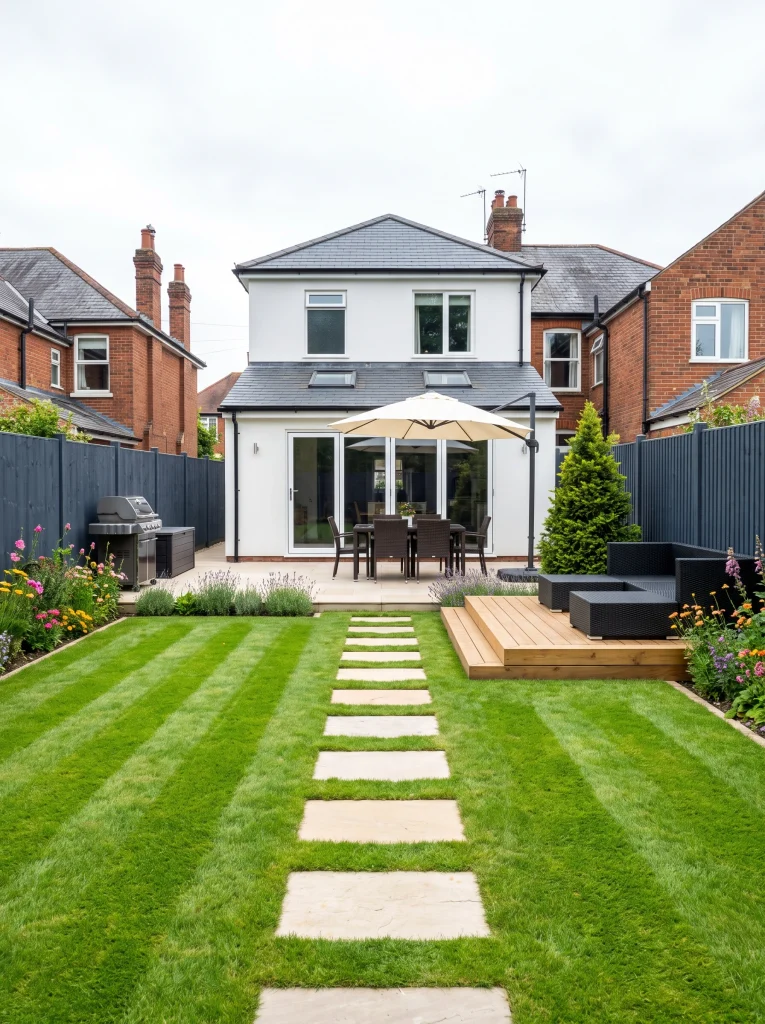
Zones only work if you can move between them easily, and that’s the job of paths and thresholds. A path should follow where you’d naturally walk — watch the worn tracks across your grass and you’ll see your real routes.
Give the main path enough width for two people or a wheelbarrow, around 90cm to 1.2m. Use a change of surface to signal you’re moving from one zone to another: gravel underfoot for the relaxed areas, solid paving where you carry food and drinks.
A curve in a path does something lovely in a small garden — it hides the far end for a moment and makes the space feel longer and more inviting than a straight line ever could.
Final Thoughts
Zoning isn’t about drawing rigid lines across your garden. It’s about being honest about how you want to live outside, then giving each activity a spot that suits it — sun for the veg, shelter for the dining, a quiet nook to sit, a screened corner for the messy stuff. Do that, and even a modest garden starts working far harder than its size suggests.
Start with just one zone this weekend. Drag a chair to a promising corner, sit in it for ten minutes, and see how it feels. That’s how every good garden layout begins — not with a plan, but with paying attention.
A garden doesn’t need to be big to feel generous — it just needs each corner to know what it’s for.